
Fumigation Service for Export-Ready Agri-Commodities: Chemical-Free Solutions
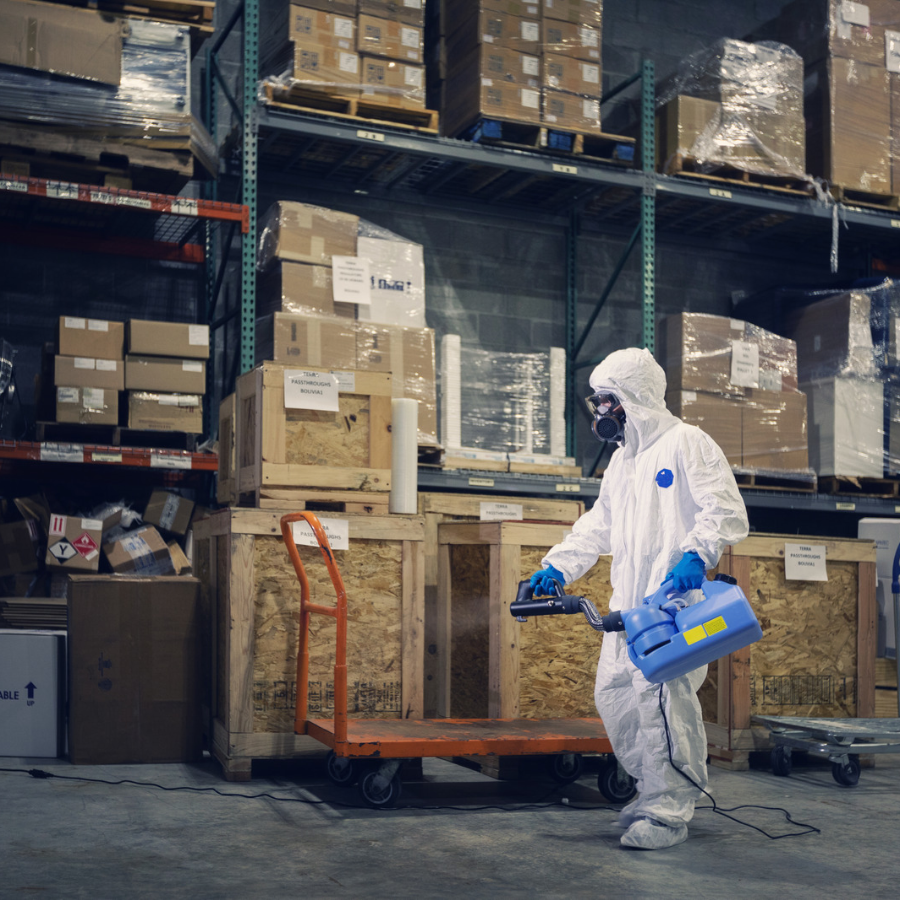
A fumigation service is a professional pest-control treatment that eliminates insects at every life stage, including eggs, larvae, pupae, and adults, in cargo, containers, warehouses, silos, and stored commodities, so shipments pass quarantine inspection and reach buyers in sound condition. For exporters of cashews, coffee, cocoa, rice, spices, dried fruit, and tobacco, the choice of method matters as much as the treatment itself, because chemical fumigants such as phosphine and methyl bromide can conflict with organic standards and residue-sensitive buyers.
Control Union EcO2 offers 2 chemical-free alternatives, controlled atmosphere treatment that lowers oxygen below 0.5% using nitrogen or CO2, and heat treatment at 56–75°C, delivered on site or at EcO2’s licensed centres in Vietnam and the Netherlands, with continuously monitored treatment data that supports export documentation.
Picture a container of premium organic cashew kernels arriving at a European port. The cargo is perfect, the contract is signed, and the buyer is waiting, until a residue test or a single live insect turns a profitable shipment into a rejection notice, a demurrage bill, and an uncomfortable call with your most important customer.
That is the risk every exporter searching for a fumigation service is trying to remove. The question is not only whether to treat your cargo but how, because the method you choose determines who will buy your product, what price you can command, and how much risk travels with each container.
What is fumigation service and why do exporters need it
A fumigation service is the controlled treatment of a commodity, container, or storage space to kill pests in every life stage. In international trade, it serves two purposes at once, protecting the value of the goods and meeting the phytosanitary requirements of the importing country.
Traditionally, “fumigation” meant gas fumigants such as methyl bromide, phosphine, or sulfuryl fluoride. Methyl bromide is an ozone-depleting substance controlled under the Montreal Protocol, its remaining global use is largely limited to quarantine and pre-shipment (QPS) exemptions, and the European Union has banned it for almost all uses, including QPS, since 18 March 2010. Phosphine remains widely used for grain and nuts, but it is a synthetic chemical treatment that organic programmes and many residue-conscious buyers do not accept on certified product.
The industry has therefore split into two approaches, and exporters need to understand both before choosing a provider.
| Factor | Chemical fumigation (phosphine, methyl bromide) | Chemical-free treatment (controlled atmosphere, heat) |
| Active principle | Toxic gas kills pests | Oxygen below 0.5% or lethal temperature kills pests |
| Residue on product | Possible, subject to MRLs | No chemical residue from the treatment |
| Organic compatibility | Not permitted on certified organic product | EcO2 states compliance with EU, USDA-NOP, JAS, Bio Suisse, and Naturland rules |
| Typical duration | Several days of exposure plus aeration | Minutes to hours (heat) or days to weeks (CA), depending on method and temperature |
| Worker and site safety | Toxic gas handling, licensed operators, exclusion zones | No toxic fumigant, but low-oxygen enclosures still require asphyxiation controls |
| Pest resistance concern | Phosphine resistance documented in key stored-product pests | Physical mode of action, low resistance risk |
The trade-off is clear, chemical fumigation is familiar, while chemical-free treatment protects market access and product integrity. For exporters targeting premium, organic, or residue-sensitive buyers, the second column is increasingly the one that decides the sale.
How fumigation protects cargo from quarantine rejection
Quarantine inspectors at the destination look for live pests, signs of infestation such as frass and webbing, and documentation showing the shipment was treated according to the importing country’s rules. A single live insect can trigger a hold, and a regulated quarantine pest such as khapra beetle (Trogoderma granarium) can trigger far stricter action.
When a shipment fails inspection, the importing authority typically orders one of several outcomes, all of which cost the exporter money and credibility.
| Rejection cause | Business impact | Prevention method |
| Live insects found at inspection | Re-treatment at destination, port storage and demurrage charges | Verified treatment that kills all life stages before loading |
| Regulated quarantine pest detected | Re-export or destruction of the consignment | Commodity assessment and destination-specific treatment protocol |
| Missing or incorrect treatment documentation | Clearance delay, possible refusal of entry | Treatment records matched to phytosanitary certificate details |
| Non-compliant wood packaging (no ISPM 15 mark) | Packaging treated, replaced, or shipment refused | ISPM 15-compliant pallets and dunnage, such as heat treated (HT) wood |
| Residues above buyer or legal limits | Rejection by buyer, loss of contract | Residue-free treatment method |
Treatment also protects cargo during transit, because a shipment that leaves port with surviving eggs can hatch a new population during several weeks at sea in warm containers. Effective treatment breaks that cycle before the container is sealed.
Which export markets require fumigation certificates
Requirements are set by the importing country, not by the exporter or the treatment provider, so the starting point is always the destination market’s rules. In most markets, the official document is a phytosanitary certificate issued by the exporting country’s National Plant Protection Organization (NPPO), which in Vietnam is the Plant Protection Department, while the treatment provider issues the treatment certificate or report that supports it.
| Market | Key official document | Points exporters should verify |
| European Union | Phytosanitary certificate for regulated plants and plant products under Regulation (EU) 2016/2031 | Organic imports also need a Certificate of Inspection issued in the TRACES system |
| United States | Phytosanitary certificate where required by USDA-APHIS import conditions | Treatment schedules in the APHIS PPQ Treatment Manual, FDA food safety rules for food products |
| Japan | Phytosanitary certificate checked by Japan’s Plant Protection Stations | Strict residue control under the positive list system, with a 0.01 ppm uniform limit for unlisted substances |
| Australia | Requirements listed in the BICON import conditions database | Some commodities require specific approved treatments and approved treatment providers |
Organic exports add another layer, because organic documents come from certification bodies and authorities, and the treatment method must be compatible with the organic standard. Always confirm current requirements with the NPPO and your importer before booking treatment, since import conditions change.
What commodities need treatment before shipment
Almost every dried, stored plant product carries some pest risk, but the level of risk and the right treatment depend on moisture, oil content, packaging, and value. EcO2 lists cashews, cocoa, coffee beans, rice, spices, dried fruit, seeds, flour, and tobacco among the commodities it treats, and grouping them by type helps exporters plan the method early.
The main commodity groups addressed by EcO2’s chemical-free methods include:
- Cashews and other nuts, whose oil content attracts Indian meal moth (Plodia interpunctella) and sawtoothed grain beetle (Oryzaephilus surinamensis), and where heat can affect quality, so controlled atmosphere is often preferred.
- Coffee, cocoa, and spices, at risk from coffee bean weevil (Araecerus fasciculatus), cigarette beetle, and storage moths, with volatile aromas that favour low-impact treatment.
- Rice, flour, and grains, exposed to rice weevil (Sitophilus oryzae) and red flour beetle (Tribolium castaneum), and suitable for silo-scale CA or heat treatment depending on the facility.
- Dried fruit and seeds, sugar-rich or living products that are sensitive to heat discoloration or germination loss.
- Tobacco, a classic host of cigarette beetle (Lasioderma serricorne) and tobacco moth (Ephestia elutella), where CA treatment is well established.
- Wood packaging, governed by ISPM 15 and usually treated by heat.
As a rule of thumb, oil-rich, aroma-sensitive, and moisture-sensitive commodities point toward controlled atmosphere, while heat-tolerant products, empty facilities, and wood packaging can often be treated by heat.
Why organic processors should switch from chemical fumigation
For organic and premium processors, chemical fumigation is not just a treatment choice, it is a market-access risk. A product can be pest-free and still be unsellable if the treatment used to make it pest-free conflicts with the buyer’s standard.
The pressure comes from three directions at once, organic regulations keep synthetic fumigants away from certified product, importers and retailers run their own residue testing, and phosphine resistance in major stored-product pests makes chemical treatment less reliable in some regions. Each trend pushes in the same direction, toward physical treatment methods that leave nothing behind.
This is where the market is moving, and early movers gain an advantage. Buyers who have been burned by a residue finding tend to consolidate their supply base around suppliers who can document residue-free treatment, which means switching method is also a way to become a preferred supplier rather than one of many.
How chemical residues affect organic certification status
Organic standards are built on a simple principle, pest control in handling facilities should rely first on prevention and physical methods, and certified product must never be contaminated by prohibited substances.
In the United States, the USDA National Organic Program’s facility pest management standard (7 CFR 205.271) requires prevention first, including management of temperature, humidity, and atmosphere, then mechanical or physical controls, and it allows prohibited synthetic substances in a facility only with the certifier’s agreement and with measures that prevent any contact with organic product. In the European Union, organic production falls under Regulation (EU) 2018/848, which replaced Regulation (EC) 834/2007 from 1 January 2022, and organic products may only be treated with substances authorised for organic use.
| Chemical agent | Position under organic rules | Practical risk for exporters |
| Methyl bromide | Must not contact certified organic product | Loss of organic status for the lot, likely contract breach |
| Phosphine (aluminium or magnesium phosphide) | Must not contact certified organic product | Residue findings can trigger investigation by the certification body |
| Sulfuryl fluoride | Must not contact certified organic product | Same consequences as above |
| Controlled atmosphere (N2, CO2) | Physical method, no substance added to product | Compatible, provided records are kept |
| Heat treatment | Physical method, no substance added to product | Compatible, provided records are kept |
When a prohibited substance is detected, the affected lot typically loses its organic status and is sold as conventional, and the certification body may investigate the operator’s control system. The financial loss is the organic premium on that lot, while the strategic loss is the buyer’s confidence, which is far harder to recover.
What premium market buyers require residue-free products
Residue requirements are no longer limited to certified organic buyers. Several buyer segments now expect suppliers to show that post-harvest treatment adds no chemical residues, either through contract specifications or their own testing programmes.
The buyer segments most likely to require residue-free treatment include:
- Organic brands and importers in the EU, US, and Japan, who must protect their own organic certification and are audited on supplier controls.
- European retail chains and private-label buyers, many of which apply residue specifications stricter than legal maximum residue limits (MRLs).
- Health-food, baby-food, and clean-label brands, where any detectable residue can conflict with the brand promise.
- Japanese food importers operating under the positive list system, where unlisted residues default to a 0.01 ppm uniform limit.
- Specialty coffee, cocoa, and spice buyers, who also care about aroma and flavour integrity.
The commercial logic is simple, residue-free status widens the pool of buyers who can say yes to your product. The actual price premium varies by commodity, grade, and season, so exporters should benchmark it against their own sales data rather than rely on generic figures.
How non-chemical treatment preserves product quality
Quality is where chemical-free treatment often wins arguments that start on cost. Controlled atmosphere works by changing the gas composition around the product without adding any reactive chemical, so flavour, colour, oil, and texture are left essentially as they were before treatment.
| Quality parameter | Chemical fumigation risk | EcO2 controlled atmosphere impact |
| Chemical residue | Residues possible, must stay below MRLs | No residue from the treatment itself |
| Taste and aroma | Possible odour or taint concerns in sensitive products | No added odour, aroma compounds preserved |
| Colour (e.g., cashew kernel whiteness) | Generally limited impact, depends on product | No heat or chemical exposure, so no treatment-induced discoloration |
| Oil quality in nuts | Limited direct impact | Low-oxygen conditions do not promote oxidation during treatment |
| Germination (seeds) | Can be affected | Depends on protocol and should be tested for seed lots |
| Insect fragments | Dead insects remain in product | Dead insects remain, so cleaning or sorting may still be required |
The last row is a point competitors rarely mention, and buyers appreciate honesty about it. Any treatment kills insects without removing them, so for visibly infested product, a cleaning or sorting step after treatment protects the grade.
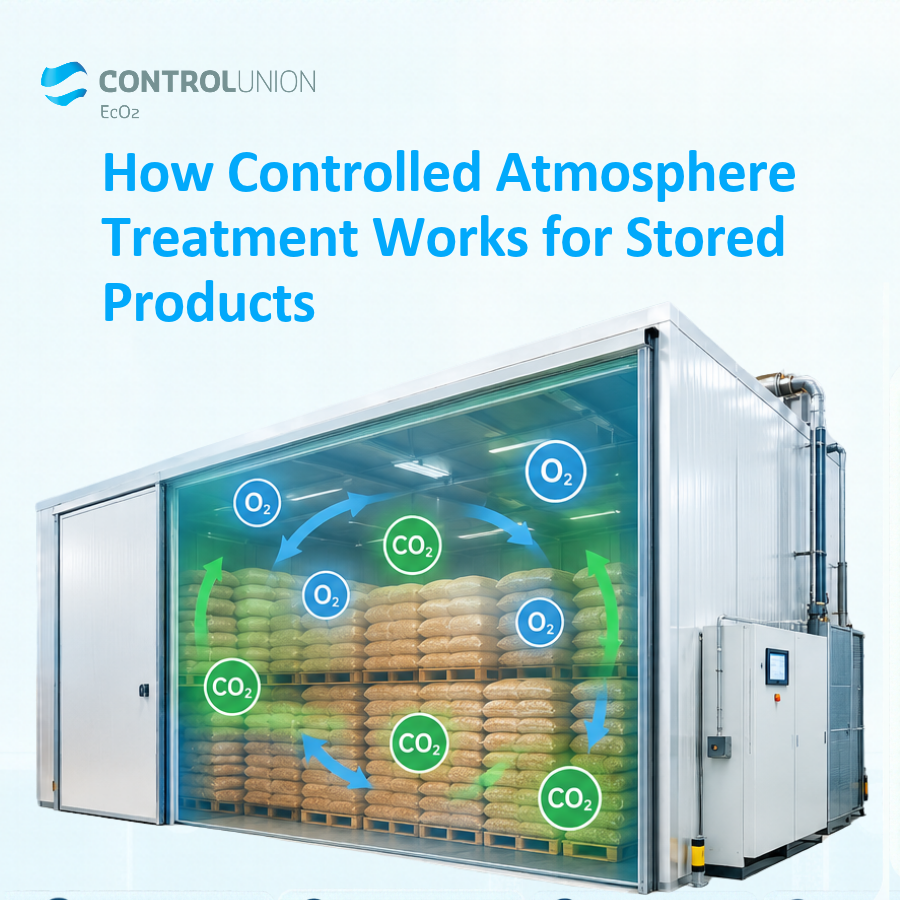
How controlled atmosphere treatment works for stored products
Controlled atmosphere (CA) treatment kills pests by removing what they need to survive. EcO2 builds on a simple principle, without oxygen or high temperature nothing can survive, and its CA systems flush gastight enclosures with nitrogen or CO2 until oxygen falls below 0.5%, a level lethal to insects at every life stage.
EcO2 delivers CA in several formats, and the right one depends on volume, site, and how often treatment is needed:
- Fixed gastight chambers, built on site at the customer’s facility or used at EcO2’s licensed centres in Vietnam and the Netherlands.
- Mobile CA containers, a standard 40ft reefer container connected to a gas generator, suited to leased warehouses or seasonal operations.
- CA tents for bagged or palletized goods, with dual doors to prevent re-contamination and optional fans and heating that can shorten treatment time.
- Reusable CA bags for bagged commodities, and gastight tarpaulins for bulk parcels.
- Silo treatments for bulk commodities such as wheat and rice.
Published research on modified and controlled atmospheres, including Navarro’s 2012 review in the Journal of Pest Science, shows that efficacy depends heavily on temperature and target species, with eggs and pupae usually the most tolerant stages. That is why CA is a protocol-driven service, not a product you simply apply, and why provider expertise matters as much as equipment.
What is the step-by-step EcO2 treatment process
A well-run CA treatment follows a sequence where every step is verified before the next begins. The steps below describe the typical workflow, which EcO2 adapts to the commodity, volume, and destination requirements.
- Pre-treatment assessment, in which EcO2 reviews the commodity, packaging, volume, moisture, product temperature, infestation level, and destination requirements, and sets the treatment protocol.
- Enclosure preparation, in which cargo is placed in a gastight chamber, CA container, tent, bag, sealed silo, or tarpaulin-covered bulk parcel, depending on the site.
- Gastightness verification, because gas leakage is the main reason CA treatments fail.
- Gas flushing, in which nitrogen or CO2 is introduced until oxygen falls below the target level, and the system holds it there throughout exposure.
- Exposure under monitoring, in which treatment parameters are continuously monitored and recorded, with gas topped up if levels drift.
- Re-oxygenation and release, in which the enclosure is opened, oxygen levels are confirmed safe before personnel entry, and the cargo is released with no chemical degassing period for the product.
- Documentation, in which EcO2 provides treatment certificates for containers or shipments on the customer’s request, backed by the monitoring data.
Safety remains essential even without a toxic fumigant. A low-oxygen enclosure is an asphyxiation hazard, so entry control, gas detection, and signage are part of every treatment.
How long treatment takes for cashews, coffee, and tobacco
CA treatment takes longer than heat treatment, and this is the most important planning fact for exporters. Exposure time is driven mainly by product temperature, target pest and life stage, the oxygen level achieved, and how quickly the atmosphere reaches the centre of the packaging.
| Commodity | Main target pests | Key time driver | Indicative exposure |
| Cashew kernels | Indian meal moth, sawtoothed grain beetle | Temperature, packaging (vacuum bags, cartons) | Several days to around 2–3 weeks, confirmed per protocol |
| Coffee beans | Coffee bean weevil, storage moths | Temperature, bag stacking density | Several days to around 2–3 weeks, confirmed per protocol |
| Tobacco | Cigarette beetle, tobacco moth | Bale density, temperature | Typically at the longer end due to dense bales |
These ranges are indicative only, based on published CA research, and the exact exposure for your shipment must come from EcO2’s validated protocol. Higher temperatures generally shorten exposure, which is why EcO2’s tents can be fitted with optional heating, while cold product extends it significantly in cooler warehouses or cold seasons.
The scheduling implication is direct, build treatment time into your production and shipping plan rather than booking it after the vessel is confirmed.
What parameters are monitored during treatment
Monitoring turns a CA treatment from a claim into evidence. EcO2 describes its approach as data-driven, with treatment parameters continuously monitored and collected, so the exporter, the buyer, and an auditor can see that lethal conditions were achieved and held.
| Parameter | Why it matters | Monitoring approach | Critical point |
| Oxygen concentration | Determines lethality, EcO2 targets below 0.5% | Continuous sensors with data logging | Oxygen rising above the protocol level triggers gas top-up or extension |
| Product and ambient temperature | Sets required exposure time | Probes in product and enclosure | Lower temperature means longer exposure |
| Relative humidity | Affects insect water loss and product condition | Sensor in enclosure | Prevents condensation risk on product |
| Enclosure gastightness | Leakage weakens treatment | Test before treatment, gas trend during treatment | A failed test means resealing before gas flushing |
| Exposure duration | Proof of required time at target conditions | Time-stamped data logs | The clock counts only while target conditions are held |
Specific thresholds beyond the oxygen target are set in EcO2’s protocol for each commodity and pest, so the data log is matched to that protocol. Exporters should ask for the monitoring data, not just a certificate, because data is what auditors increasingly want to see.
How heat treatment eliminates insects and microorganisms
Heat treatment kills pests by raising temperature to a level insects cannot survive and holding it for a defined time, so their proteins and enzymes break down. EcO2 operates within a 56–75°C range and applies heat either directly to the product through microwave in-line systems or to spaces such as silos, warehouses, and packing rooms through mobile heaters.
Heat and CA solve different problems. Heat is fast and suits empty facilities, equipment, wood packaging, and in-line processing of dry commodities, while CA is slower but gentler and suits oil-rich, aroma-sensitive, and high-value stock held in storage.
The best-known heat standard in trade is ISPM 15 for wood packaging, which requires the wood core to reach at least 56°C for 30 continuous minutes under conventional heat treatment, marked with the “HT” code, or 60°C for 1 minute throughout the wood profile under dielectric heating. These values apply to wood only and should not be copied onto food commodities without product-specific validation.
Microorganisms are a different story, and this is a common misconception worth correcting. Temperatures that kill insects do not automatically sterilise a product, because a documented microbial reduction needs a specifically validated time-temperature and moisture profile, so heat treatment for pests and heat treatment for microbial control should be discussed separately with EcO2.
Which commodities are suitable for heat treatment
Suitability depends on how a commodity responds to heat, mainly through moisture, oil content, volatile compounds, and physical structure. The matrix below gives a planning view, and every commodity should be validated in a pilot before full-scale treatment.
| Commodity or object | Heat suitability | Main quality risk | Preferred alternative if unsuitable |
| Wood packaging (pallets, crates, dunnage) | High, standard ISPM 15 method | Minimal | Not usually needed |
| Empty silos, warehouses, packing rooms | High, using mobile heaters | Heat-sensitive fittings, electronics, sprinklers | CA in sealed areas |
| Rice, grains, and pulses (dry) | Moderate to high, including microwave in-line | Germination loss, moisture loss | CA |
| Whole spices | Moderate, microwave in-line with validated settings | Loss of volatile oils and aroma | CA |
| Cashews and other oil-rich nuts | Moderate, microwave in-line with validated settings | Oil oxidation, colour change, texture | CA |
| Dried fruit | Low | Sugar caramelisation, stickiness, colour | CA |
| Tobacco | Low to moderate | Moisture and quality changes | CA |
Exact temperature-time combinations depend on product mass, packaging, and heating method, so EcO2 sets them per job and per product rather than applying a generic setting. Where heat poses a quality risk, CA is the safer chemical-free choice.
How microbial control extends shelf life
Shelf life in dried commodities is lost through three main routes, insect damage, mould growth, and chemical deterioration such as rancidity. Pest treatment contributes to shelf life mainly by stopping insect activity, because insects create heat, moisture, and broken kernels that become hotspots for mould.
Direct microbial reduction by heat is possible but needs care. EcO2’s microwave in-line machine also regulates humidity and supports drying, and lower moisture and water activity slow mould growth during long ocean transit, but a documented pathogen reduction claim still requires validated conditions and laboratory testing on the specific product.
After treatment, shelf life depends heavily on storage conditions. Keeping moisture low, using moisture-proof packaging, and preventing re-infestation in storage protect the result, while poor storage can undo a perfect treatment within weeks.
For exporters who want to quantify shelf-life benefits, the most credible approach is a controlled trial on their own product, recorded like this:
| Product | Measurement | Untreated lot | Treated lot |
| [Your commodity] | Total plate count and yeast and mould count at day 0 | [Lab result] | [Lab result] |
| [Your commodity] | Same counts after a defined storage period | [Lab result] | [Lab result] |
| [Your commodity] | Moisture content and insect activity after storage | [Measurement] | [Measurement] |
Using your own laboratory data gives buyers evidence they trust far more than generic claims, and it protects you from overpromising.
What compliance documents EcO2 provides after treatment
Documentation is where many exporters lose shipments that were treated correctly. The key is understanding who issues what, because the treatment provider, the NPPO, and the organic certification body each issue different documents, and importers check that they match.
EcO2, as the treatment provider, issues treatment certificates for containers or shipments on the customer’s request, for cargo monitored by EcO2’s monitoring systems. The NPPO issues the phytosanitary certificate, which may record the treatment details, and the organic certification body issues organic documentation, which the treatment record helps support.
A complete documentation package for a chemical-free treatment usually includes the following elements:
- Treatment certificate stating method, commodity, quantity, lot identification, dates, and treatment conditions.
- Monitoring data covering oxygen or temperature, and exposure time.
- Equipment calibration records for the sensors and loggers used.
- ISPM 15 marking on wood packaging treated by an authorised provider.
- A statement of treatment method confirming no chemical fumigant was used, which supports organic and residue-free claims.
Which certificates meet EU, US, and Japan import requirements
Each destination accepts the treatment record as supporting evidence, but the documents that clear the border are defined by the importing country. The table below shows how treatment documentation fits each market.
| Destination market | Required official documents | Issuing authority | How the EcO2 treatment record supports it |
| European Union | Phytosanitary certificate where regulated, Certificate of Inspection in TRACES for organic goods | NPPO of exporting country, organic control body | Provides treatment details, supports organic compliance |
| United States | Phytosanitary certificate where required by APHIS, NOP organic documentation for organic goods | NPPO, USDA-accredited certifier | Supports treatment declaration and NOP pest management records |
| Japan | Phytosanitary certificate, organic JAS documentation for organic goods | NPPO, registered certification body | Supports treatment declaration and residue-free positioning |
Validity periods and timing rules differ by country and commodity, so confirm with the NPPO how close to export the treatment and inspection must take place. EcO2 can align its treatment certificate with the information the NPPO and your importer need.
How documentation supports premium buyer audits
Premium buyers increasingly audit how suppliers control pests, not only whether a certificate exists. Good documentation turns an audit from a stressful event into a routine check, and it shows buyers that the supplier manages risk systematically.
An audit-ready file for treated lots typically covers these points:
- Traceability from raw material lot to treated batch to shipped container, with lot numbers matching across documents.
- Chain of custody showing where the product was stored after treatment and how re-infestation was prevented.
- Calibration records for monitoring equipment, proving the data is reliable.
- Standard operating procedures that describe how the treatment protocol is selected and verified.
- Non-conformance and corrective action records, logging any deviation, such as a rise in oxygen level, and how it was resolved.
These records support food safety and quality schemes such as BRCGS, IFS, and FSSC 22000, which expect pest control to be documented and verifiable. They also support organic inspections, where the inspector checks that only permitted pest-control methods were used.
Can treatment be performed at your factory or warehouse
Yes, and this flexibility is one of the strongest practical advantages of a chemical-free fumigation service. EcO2 can build fixed CA chambers at the customer’s facility, bring mobile CA containers, tents, bags, or silo systems on site, use mobile heaters for silos and storage areas, or treat cargo at its licensed centres in Vietnam and the Netherlands.
The right location depends on volume, timing, product sensitivity, and logistics. Treating where the product already is avoids extra handling, while treating at a licensed centre offers controlled conditions and simpler logistics for smaller or mixed lots.
| Treatment location | Best for | Minimum volume | Lead time |
| On site (fixed chamber, CA container, tent, silo, mobile heater) | Large lots, regular programmes, products that should not be moved | [Confirm with EcO2] | [Confirm with EcO2] |
| EcO2 licensed centre (Vietnam or Netherlands) | Small or mixed lots, urgent treatments, exporters without suitable space | [Confirm with EcO2] | [Confirm with EcO2] |
What are the benefits of on-site mobile treatment
On-site treatment brings the service to the product, which is valuable for exporters running continuous production or storing large volumes. It also reduces handling, which is a quality and cost issue for fragile products such as cashew kernels.
The main benefits for exporters include:
- No extra transport or double handling, which saves cost and reduces breakage and contamination risk.
- Just-in-time treatment close to loading, which narrows the window for re-infestation.
- Treatment of facilities and stock together, for example heat-treating an empty silo before loading and CA-treating stored lots.
- A permanent solution for frequent needs, since fixed chambers built on site suit factories that require regular and reliable insect control.
On-site treatment has practical requirements. The site needs enough space for the chamber, container, or tent, safe access for equipment and gas supply, power for gas generators and monitoring equipment, and controlled access during treatment.
Scheduling lead time and geographic coverage should be confirmed with EcO2 for each location, especially during peak export seasons.
When should you use EcO2’s Vietnam service centre
EcO2 opened its Vietnam office in 2006, building its EcO2 Control Center and factory there, and its licensed treatment centre gives exporters an alternative when on-site treatment is not efficient or possible. It suits exporters who lack suitable space, ship smaller or variable lots, or need treatment arranged quickly before a booking deadline.
Using the service centre typically makes sense in these scenarios:
- Small or mixed batches that do not justify setting up an enclosure on site.
- Exporters without gastight-capable space, such as traders consolidating product from several suppliers.
- Urgent orders, where an established facility can schedule treatment faster than site preparation allows.
- Multiple shipments from different suppliers that can be treated in one location before consolidation.
The trade-off is transport to and from the centre, so the decision usually comes down to volume and location. Exporters should compare total cost, including handling and trucking, against on-site treatment, and confirm capacity and holding options directly with EcO2.
What ROI processors achieve by upgrading to chemical-free treatment
The return on chemical-free treatment is not mainly about the treatment fee, it is about the revenue and risk on the cargo being treated. Because premiums, rejection rates, and treatment prices vary widely, the most reliable ROI estimate uses your own numbers in a simple framework.
A practical ROI model compares four values per year:
- Premium gained, meaning the additional price per tonne from organic or residue-free sales multiplied by tonnes sold in those channels.
- Losses avoided, meaning the historical cost of rejections, re-treatment, demurrage, and downgraded lots.
- Market access gained, meaning the margin from new buyers or markets that require residue-free supply.
- Incremental treatment cost, meaning the difference between chemical-free and chemical treatment cost, including any extra storage time.
ROI equals the sum of the first three values minus the incremental cost, divided by the incremental cost, and the payback period equals the incremental cost divided by the monthly benefit. For exporters selling into organic or premium channels, a single avoided rejection or retained organic contract can outweigh the added treatment cost, but confirm this with your own data before presenting it to management.
Which export success cases demonstrate treatment effectiveness
Track record is the strongest proof in B2B buying, and EcO2’s project history shows chemical-free treatment working at commercial scale. Founded in the Netherlands in 2000 and part of Peterson & Control Union since 2010, EcO2 reports that its techniques are trusted by customers in more than 25 countries.
| Commodity | Treatments completed | Countries |
| Cashews | 18,096 | Vietnam, Ivory Coast |
| Rice | 1,849 | Vietnam, Greece, UK, Netherlands, Switzerland, Belgium, Germany, France |
| Tobacco | 1,730 | Philippines, Malaysia, Indonesia, Turkey |
| Wheat | 1,377 | Greece, Switzerland, Italy, UK, Netherlands, Austria |
Source: Control Union EcO2, About us page, eco2.controlunion.com, accessed October 2026.
For individual client stories, publish only outcomes approved by the client, such as shipments accepted, re-treatment avoided, or organic contracts retained. Verified results from named or anonymised clients are far more convincing than general claims of effectiveness.
What mistakes cause shipment rejection despite fumigation
Treatment alone does not guarantee clearance. Many rejections happen after a technically successful treatment, because of gaps between the treatment, the documents, and what happens to the cargo afterwards.
The most common avoidable mistakes include:
- Wrong document for the destination, such as a treatment certificate without the phytosanitary certificate the importing country requires.
- Mismatched details, where lot numbers, quantities, or container numbers differ between the treatment certificate and the phytosanitary certificate.
- Treatment too long before shipment, leaving time for re-infestation in storage.
- Re-infestation after treatment, caused by storing treated goods next to untreated stock or in an infested warehouse.
- Untreated wood packaging, where cargo is treated but pallets lack the ISPM 15 mark.
Most of these risks are controlled by planning treatment around the shipping schedule and checking documents against each other before the container leaves.
Ready to access premium markets with residue-free exports
Every shipment you send is a statement about your standards, and buyers are paying closer attention than ever to what was used on the product they buy. Exporters who move to chemical-free treatment now are building the supplier credentials premium buyers increasingly expect, while others wait until a rejection forces the change.
Control Union EcO2 can assess your commodity, destination requirements, and site, and recommend whether controlled atmosphere or heat treatment fits your product and schedule. For an accurate proposal, share your commodity, volume, packaging, location, destination market, and shipping timeline.
Peak export seasons fill treatment calendars quickly, so book your assessment early to secure treatment slots before your next contract deadline. Contact the EcO2 team at salesvn@eco2.vn or +84 (0)933 215 302.
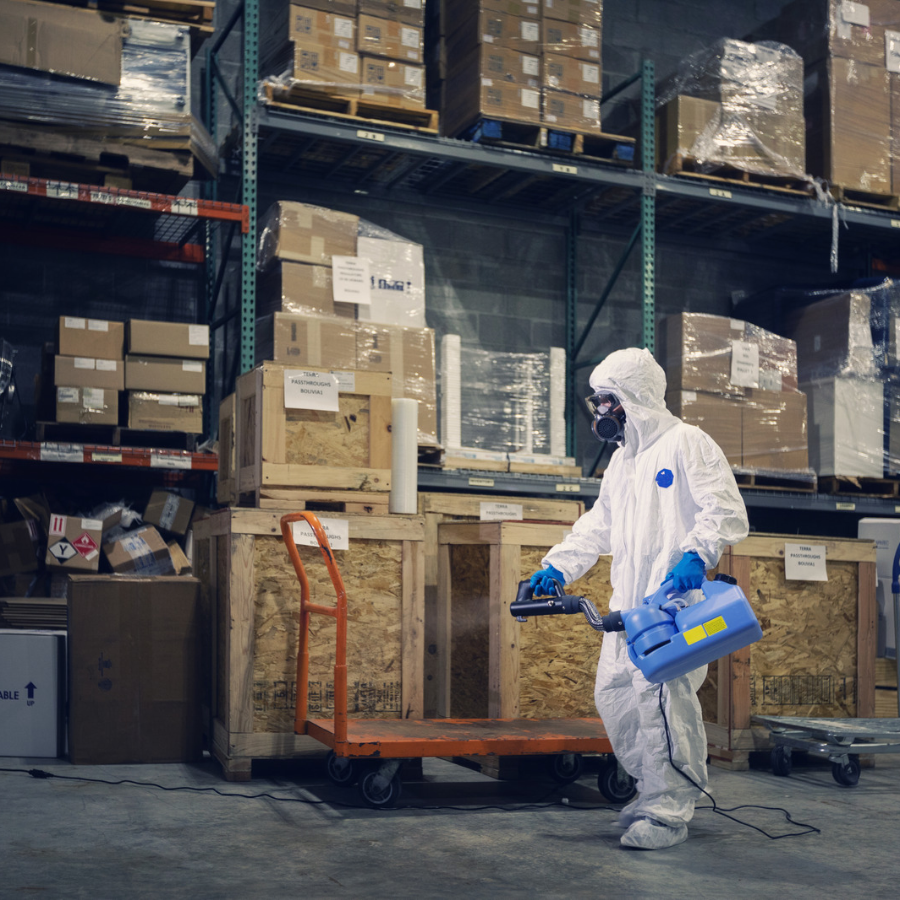
Frequently asked questions about fumigation service
Does non-chemical treatment work for ready-to-eat products
Controlled atmosphere treatment can be used on many packaged dried foods because it adds no chemical residue, and EcO2’s chambers are suitable for both raw materials and finished products. Suitability should still be validated with EcO2 for each product and packaging type.
How far in advance should exporters schedule treatment
Exporters should book treatment as soon as the shipment date is planned, allowing for the full CA exposure time plus documentation. During peak seasons, booking earlier helps secure capacity.
Can EcO2 coordinate directly with freight forwarders
EcO2 can align treatment timing with your container loading schedule, and the exact scope of coordination with your freight forwarder should be confirmed when booking.
What information is required for a treatment quotation
EcO2 typically needs the commodity, volume, packaging, current storage location, destination market, required timeline, and any organic or buyer certification requirements. Sharing these details upfront allows a faster and more accur